
The race to extract resources beyond Earth is accelerating, and so is the call for clear rules to govern it. As private companies and national agencies eye lunar ice and asteroid metals, legal frameworks are struggling to keep pace with technological ambitions.
In mid-July 2025, space policy experts renewed their appeal for international coordination, warning that without a unified system, competing laws and agreements could create legal fragmentation – and even spark disputes – in the growing space economy.
A Growing List of National Space Mining Laws
On June 11, 2025, Italy became the sixth nation to pass legislation governing the extraction and commercialization of space resources. It joins the United States, Luxembourg, the United Arab Emirates, Japan, and Brazil, forming an early club of countries aiming to give their companies a head start in the new space economy.
What do these laws actually do?
- United States (2015 Commercial Space Launch Competitiveness Act) – Gives U.S. companies the right to own and sell resources they extract from space, provided they comply with U.S. licensing and the Outer Space Treaty.
- Luxembourg (2017 Space Resources Act) – Introduced a licensing system and even co-investment opportunities for private ventures. Luxembourg has positioned itself as a hub for space mining startups, hosting companies like iSpace Europe.
- UAE and Japan – Adopted similar frameworks that focus on licensing and compliance oversight, enabling local firms to pursue off-world resource projects with legal backing.
- Brazil and Italy (2024 – 2025) – Recent entrants with laws modeled after the U.S. and Luxembourg approaches, emphasizing national licensing and international treaty compliance.
For private companies and investors, these laws provide something crucial: legal certainty. Without property rights over extracted resources, raising capital for asteroid mining missions or lunar resource processing would be nearly impossible.
The Artemis Accords: Popular but Limited
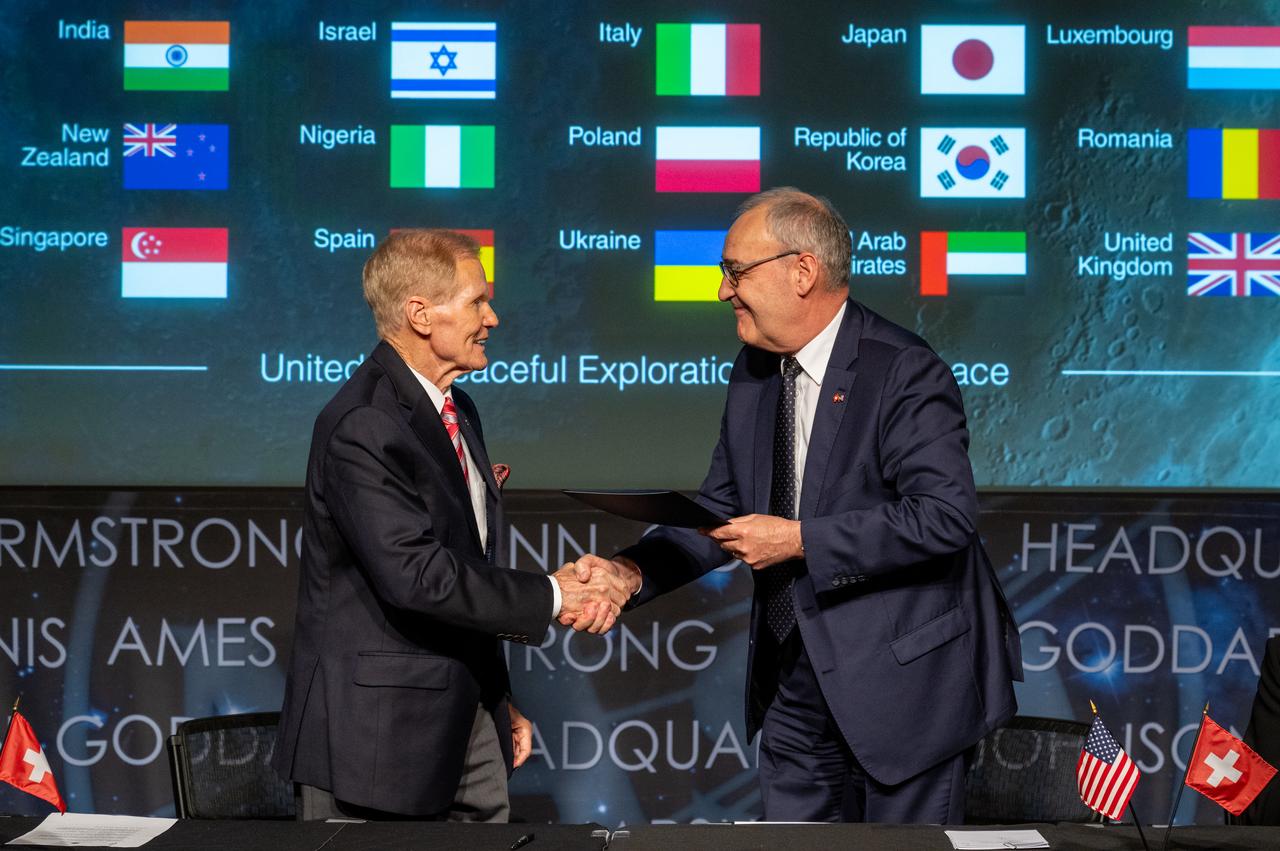 Switzerland signing the Artemis Accords
The Artemis Accords, launched in 2020 by the U.S., have become the most widely adopted framework for responsible space activities. As of June 2025, 55 nations have signed on. The accords:
- Affirm that resource extraction does not violate the Outer Space Treaty.
- Promote principles of transparency, data sharing, and deconfliction of activities.
- Encourage “safety zones” to prevent harmful interference between missions.
But here’s the catch: the accords are non-binding. They rely on voluntary compliance, with no enforcement mechanism or penalties for violations. And while signatories include major partners like Japan, Canada, and the EU, key players such as Russia and China remain outside the agreement, arguing it favors U.S. interests.
Why Global Rules Are Urgently Needed
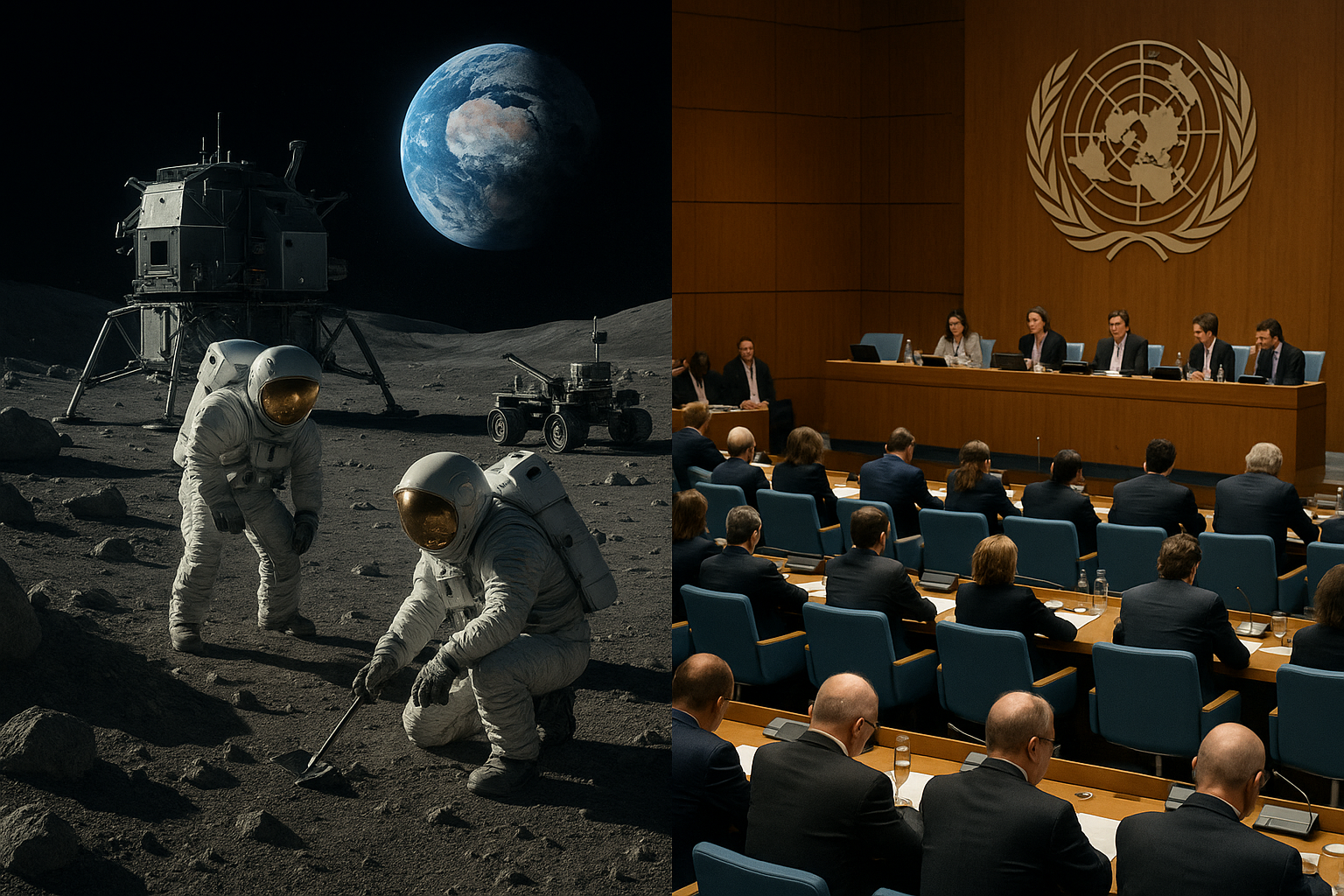
The pace of development is accelerating:
- NASA’s Artemis program aims for a sustained human presence on the Moon by the early 2030s.
- Private ventures like AstroForge are planning asteroid prospecting missions, with one already launched in 2025.
- China and Russia have proposed an International Lunar Research Station, potentially competing with Artemis landing zones.
Now imagine two missions targeting the same resource-rich crater at the lunar south pole. Which one gets priority? What happens if a private lander damages another country’s hardware? Without dispute-resolution processes, every incident could escalate into a diplomatic crisis.
Experts suggest adopting models similar to deep-sea mining governance under the UN Convention on the Law of the Sea (UNCLOS). That system uses an international authority to allocate rights and ensure environmental safeguards principles that could prevent chaos in space.
The Role of the UN and What Comes Next
The United Nations Committee on the Peaceful Uses of Outer Space (COPUOS) is drafting “recommended principles” for space resource utilization, with a zero draft expected by 2027. While these principles may not be legally binding at first, they could become the foundation for a future treaty – much like the OST in 1967.
Until then, the legal landscape will remain a mix of national laws, bilateral agreements, and voluntary accords. This patchwork offers short-term solutions but risks creating long-term uncertainty.
The Stakes for the Emerging Space Economy
Why does this matter now? Because the first companies to successfully extract and process lunar water or asteroid metals will gain a powerful economic advantage. Water ice can be used to produce certain types of rocket fuel, cutting costs for deep-space missions. Platinum-group metals mined from asteroids could reshape Earth’s resource markets.
As governments and companies invest billions in these missions, they need assurance that their efforts will be legally protected – and that their rivals will play by the same rules. The framework built in the next few years will determine whether space resources become a cooperative venture or a new frontier for disputes.